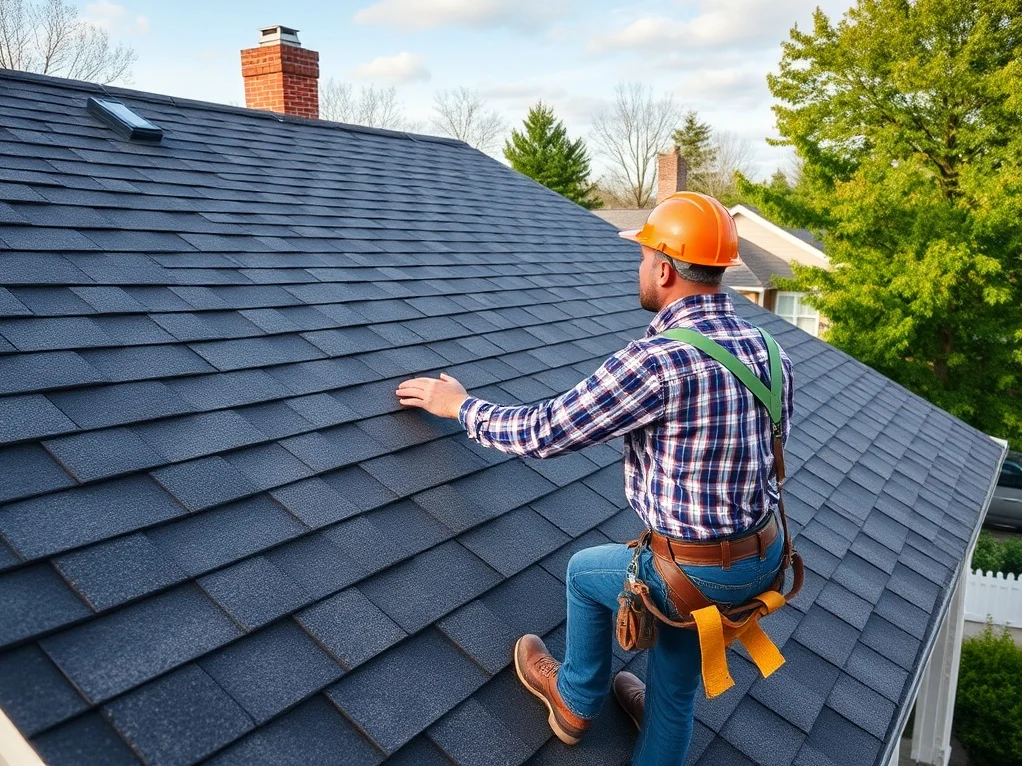
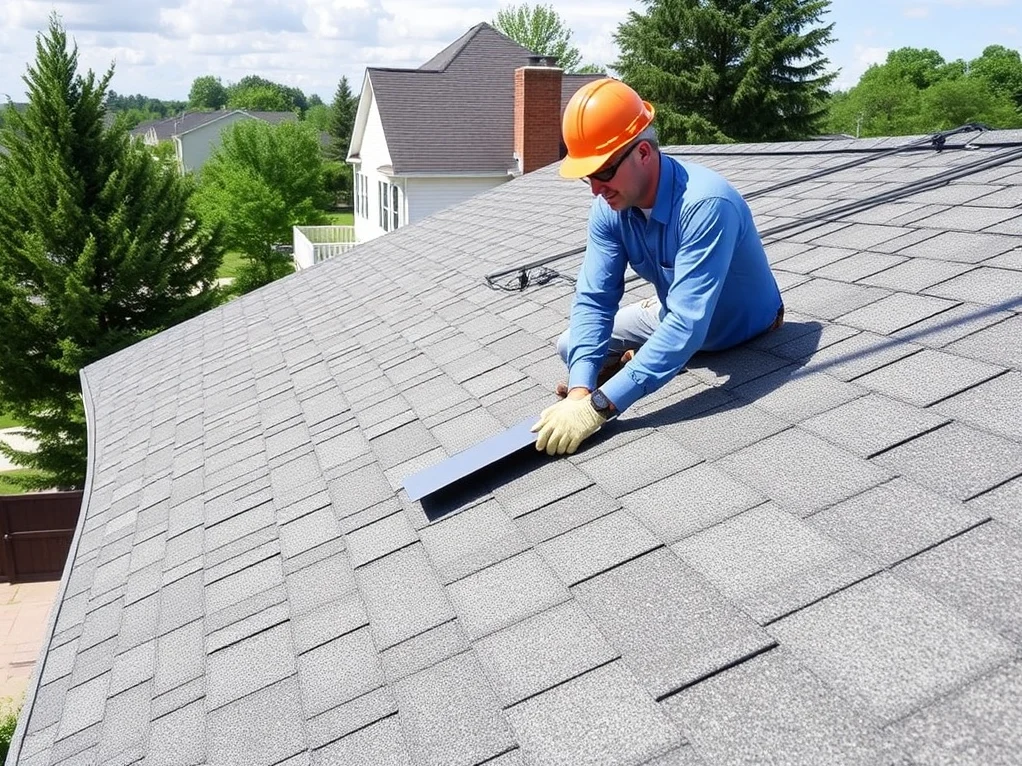
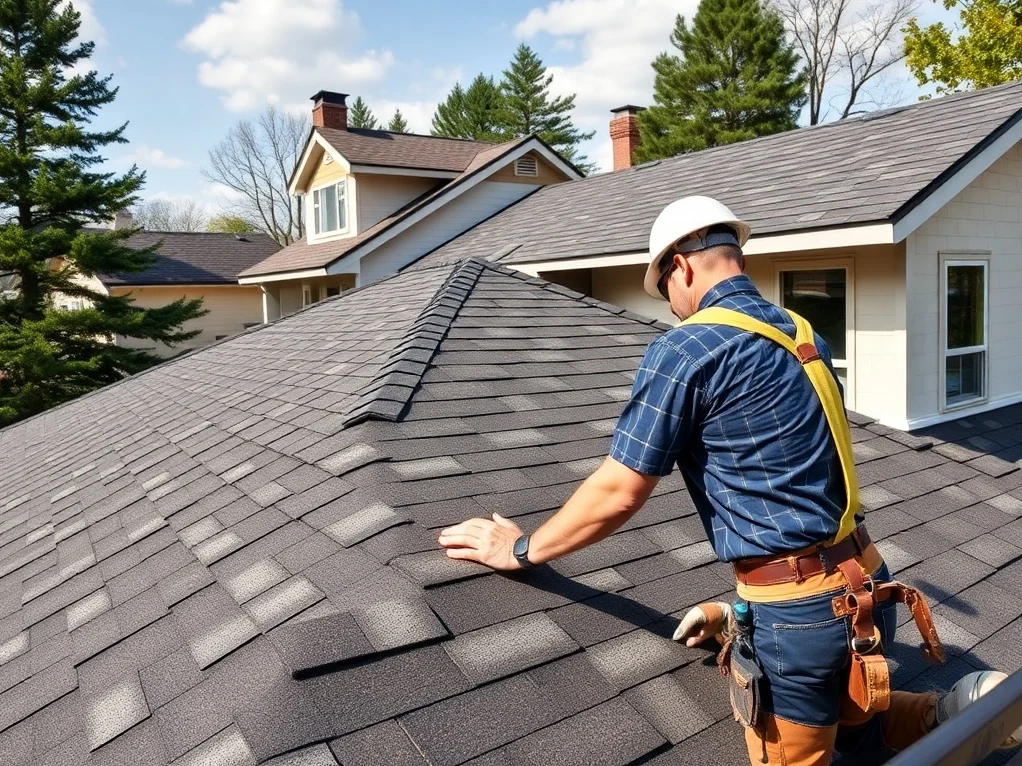
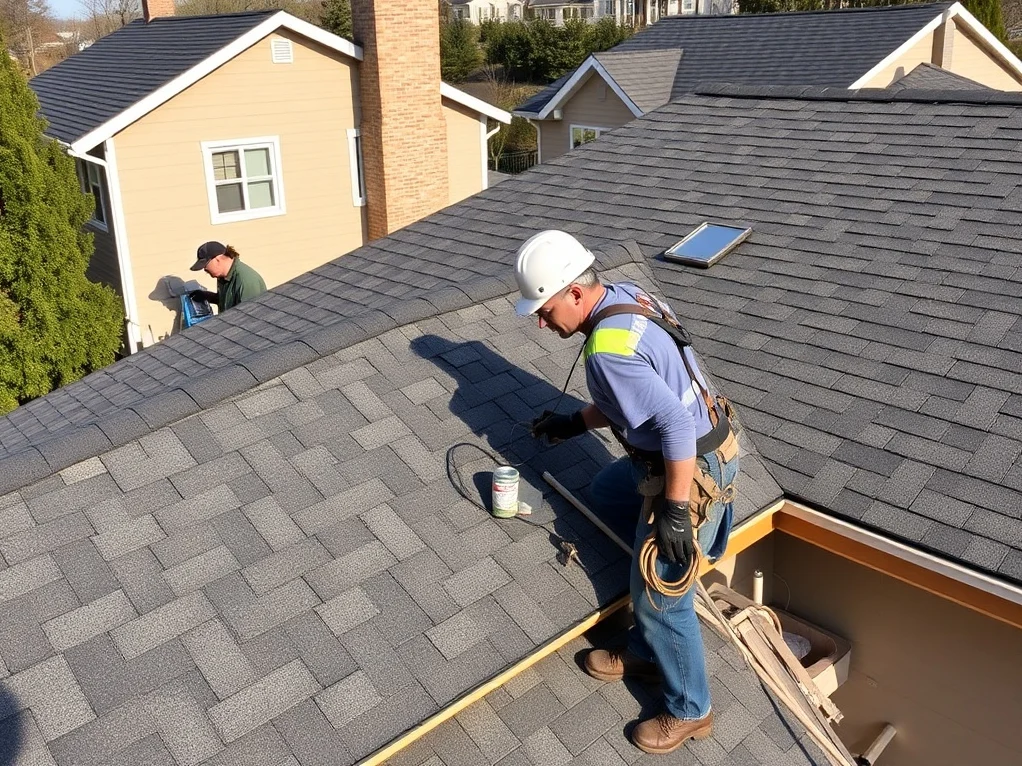
Storm damage repair is the work we do between one storm and the next. Hail in late spring bruises asphalt shingle and knocks granules loose, so rain wicks through the mat instead of running off the rooftop.
Wind peels back the ridge cap and the starter course at the eave. Rapid freeze-thaw cycles then open every seam the hail started, and water reaches the roof deck within a week.
We begin with emergency tarping so your home stays dry while we work. A tarp over the damaged slope buys days of protection, and a same-day roof inspection tells you whether you need a repair or a full replacement.
Then we document everything for your insurance claim: photos, moisture readings, and a line-item estimate in the format adjusters expect, so the file moves instead of sitting in review.
Permits and building code requirements vary by city, and we pull the right paperwork before a single bundle lands in your driveway. A licensed roofer handles that part, and we walk the roofline with you so nothing gets missed.
Replacement shingles take the same beating again unless the deck underneath is sound. We check plywood sheathing and OSB for rot, decay, and sag before we fasten anything down.
Waterproofing a storm-damaged roof means replacing what failed instead of covering it, because weatherproofing depends on every lap and seal holding through the next thaw.
What We Inspect After a Storm
- Shingle fields, where granule loss and hail bruising show up before anything else looks wrong.
- Chimney flashing and step flashing along sidewalls, which take the most wind-driven rain.
- The valley, where two roof planes meet and debris piles up fastest after a wind event.
- Drip edge and fascia, which rot once water runs behind a bent gutter or downspout.
- Soffit and soffit vents, because a clogged soffit starves the attic of ventilation.
- Ice-and-water shield along the eave, your last defense when an ice dam backs water up.
- Roof deck and substrate, checked for moisture content, splitting, and soft spots.
Materials We Use for Storm Repairs
- Architectural shingle carries a heavier mat than three-tab shingle and holds up better under hail.
- Synthetic underlayment replaces roofing felt and tar paper and resists tearing when crews walk the roof.
- Ice-and-water shield is a self-adhered membrane we run along eave edges and through every valley.
- Metal panel roofing in standing-seam panel or corrugated panel sheds snow well on steep pitches.
- TPO, EPDM, and PVC membrane cover flat and low-slope sections, alongside modified bitumen and built-up roof systems where bitumen and asphalt still make sense.
- Wood shake, cedar shake, slate, clay tile, and concrete tile get matched by profile so a repair blends with the rest of the roof.
Roofing Components We Repair or Replace
- Apron flashing, boot flashing, pipe flashing, pipe boot, and vent boot sit wherever a pipe or wall interrupts the roof, and each needs fresh counter-flashing to stay tight.
- Drip edge, rake trim, verge boards, fascia, soffit, and the roof overhang all push water off the walls once the gutter is clear.
- Skylight, dormer, chimney, parapet, scupper, coping, canopy, and awning details are where a small leak spreads into the attic fastest.
- Truss, rafter, joist, ridge beam, purlin, batten, and counterbatten get checked for sag before we close anything back up.
- Ice-and-water shield, vapor barrier, and synthetic underlayment make up the layers under the shingle itself.
- Ridge cap, ridge vent, soffit vent, attic fan, and insulation work together so the attic breathes, with roof cement, mastic, sealant, caulk, and adhesive sealing every joint.
- Hip, gable, mansard, and gambrel shapes each take a different approach, and pitch decides which system fits your home.
Tools and Crew Safety on Every Storm Job
- Scaffold and ladder setup, plus a safety harness anchor at the ridge for anyone working a steep roof.
- A roofing square and pry bar handle tear-off of damaged courses without chewing up good decking.
- Nail gun and air compressor drive ring-shank nails and screws to the right depth on every fastener.
- Roofing shovel clears the loose material, and a dumpster on site keeps tear-off waste out of your yard.
- A torch is used only for modified bitumen detailing, never near dry underlayment or wood decking.
- Every job closes with a written roof estimate and a photo record, so you know what was fixed and why.
Timing matters more than most homeowners expect. A tarp lasts weeks, not months, and every freeze-thaw cycle widens the gap water already found.
Call 612-979-0693 and we schedule the inspection, tarp what needs tarping, and hand you a written roof estimate you can send to your insurer the same week.