Commercial roofing on a low-slope building is a system decision, not a shingle decision. We complete a roof asset survey of the membrane, the insulation, and the roof deck before recommending TPO, EPDM, modified bitumen, or a built-up roof.
Skip that step and you pay twice. Ponding water at a scupper, a parapet flashing that peels, or insulation that has wicked moisture all shorten the life of any membrane laid over them. A coating can buy years on a sound roof, but a saturated roof deck cannot be coated back to health.
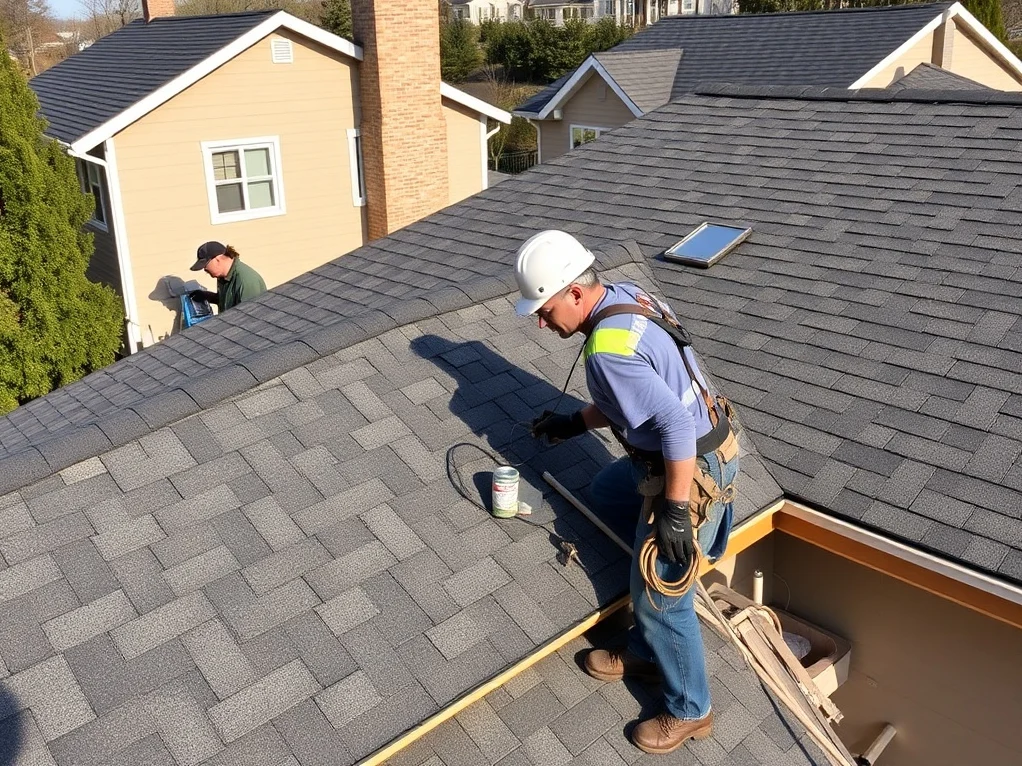
Our crews work from scaffold or a swing stage in a safety harness, and we schedule around tenants so loading zones and parking stay open. Building code compliance, ventilation, and warranty terms get settled before the first dumpster lands on site.
Low-slope systems we install and maintain
- TPO membrane: a heat-welded white single-ply that reflects summer sun and carries a 15 to 30 year no-dollar-limit warranty when it is installed to manufacturer specification.
- EPDM: a rubber membrane that stays flexible through rapid freeze-thaw cycles and shrugs off hail that would bruise an asphalt shingle on a pitched roof.
- Modified bitumen: an asphalt-based sheet reinforced with polyester or fiberglass fabric, applied with a torch or as a self-adhered ply over a primed substrate.
- PVC single-ply: a chemically welded membrane for restaurants and shops where kitchen grease and rooftop exhaust would eat through lesser materials.
- Built-up roofing (BUR): alternating plies of roofing felt and bitumen finished with gravel or a cap sheet, still common on older rooftops around the Twin Cities.
- Metal panel and standing-seam panel: concealed-fastener systems with a long service life, often specified for canopies, awning roofs, and mansard or gambrel rooflines.
- Silicone and acrylic roof coating: a fluid-applied finish that fills minor splits and restores reflectivity on a membrane that is worn but not yet at end-of-life.
What a failing commercial roof looks like
- Ponding water that sits more than 48 hours after a rain, which erodes the membrane and adds dead load to the structure.
- Blistering and alligatoring, where the surface cracks into a pattern that lets water wick down into the insulation.
- Seam splits and delamination along the laps, often where a prior crew walked a lap before the adhesive cured.
- Rust streaks and spalling at metal edge, coping, and rooftop equipment curbs.
- Stained ceiling tiles inside, which usually means the leak started at a pipe boot or vent boot and traveled along the roof deck.
- Clogged scuppers, gutters, and downspouts that back water up under the flashing at a parapet.
How we do the work, start to finish
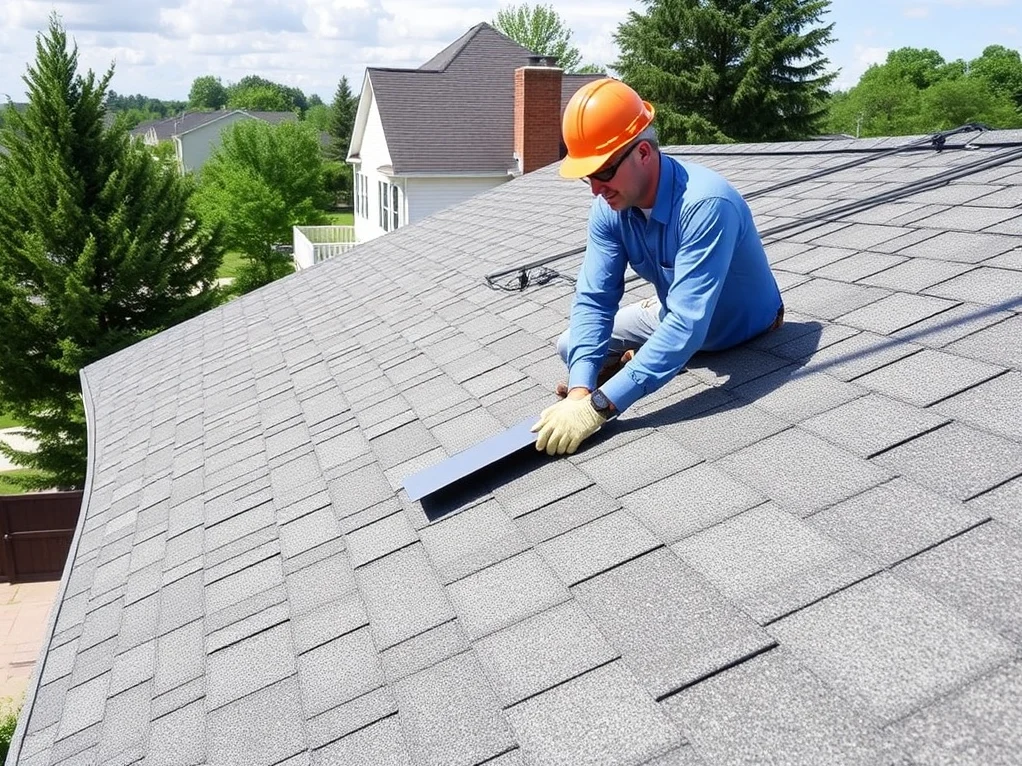
- Roof inspection and moisture survey: we walk the roof, probe the suspect areas, and pull a core sample to measure insulation moisture content.
- Written roof estimate: line-item pricing by the roofing square, with tear-off, overlay, and recover options priced separately.
- Permit and building code review: we confirm the assembly meets code for the deck type and that vapor barrier and ventilation details line up.
- Tear-off or recover: debris goes into the dumpster, fasteners come out with a pry bar or roofing shovel, and the substrate gets checked for rot or sag.
- Deck repair: soft spots get cut out and replaced with plywood or OSB sheathing over the truss, rafter, and ridge beam framing.
- Insulation and cover board: new rigid insulation restores R-value and gives the membrane a flat substrate to bond to.
- Membrane installation: mechanically attached with screws and plates or fully adhered with adhesive, then hand-sealed at every penetration.
- Flashing and detailing: apron flashing, counter-flashing, pipe flashing, scupper, and expansion joints get finished before the crew leaves the site.
Details that decide whether a roof lasts
- Ice-and-water shield along the eave and in the valleys, the self-adhered membrane that stops an ice dam from backing water under the field.
- Drip edge at the eave and rake, which keeps runoff off the fascia and out of the soffit.
- Step flashing and counter-flashing where a wall or chimney meets the roof, the most common leak point on any pitched assembly.
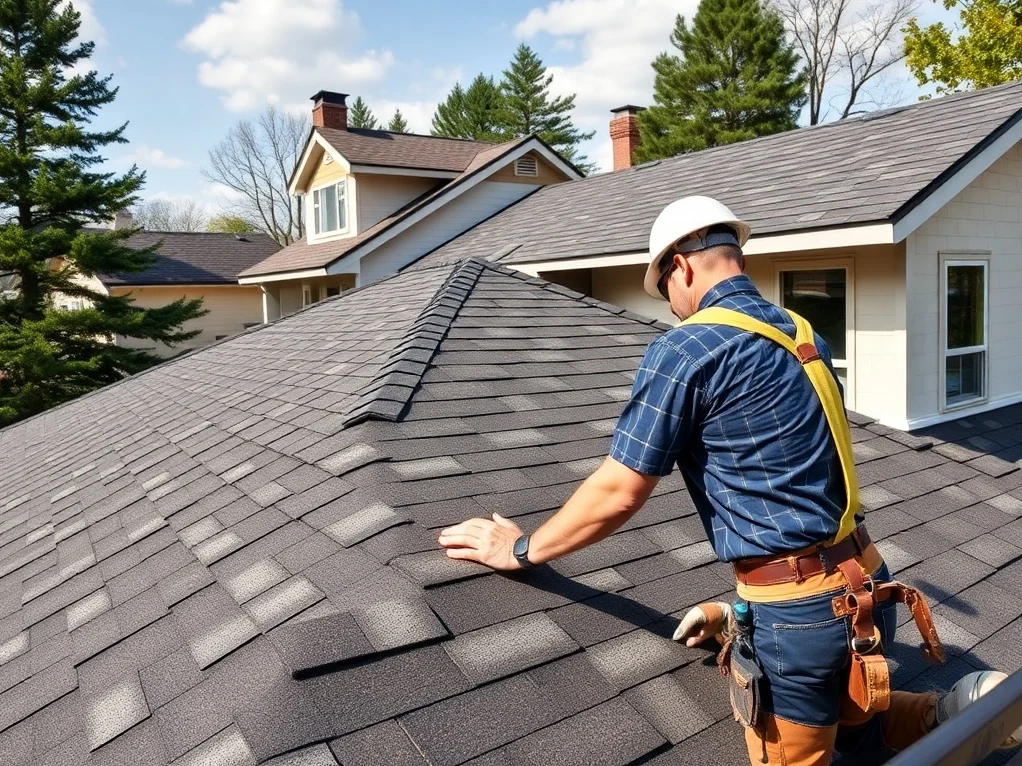
- Ridge cap and ridge vent at the peak, working with soffit vents or an attic fan to push hot, moist air out of the attic.
- Pipe boots, vent boots, and skylight curbs, each sealed with a collar or boot flashing and a bead of sealant.
- Gutters and downspouts sized so spring meltwater clears the overhang instead of sheeting down the siding.
- Snow guards above walkways and entries, anchored into the deck so a sliding snow load does not take the gutter with it.
We also work the pitched side of the same properties, from three-tab and architectural asphalt shingles to wood shake, cedar shake, slate, clay tile, and concrete tile. Corrugated panel and metal panel profiles show up on porches, canopies, and awning roofs where a flat membrane would look wrong.
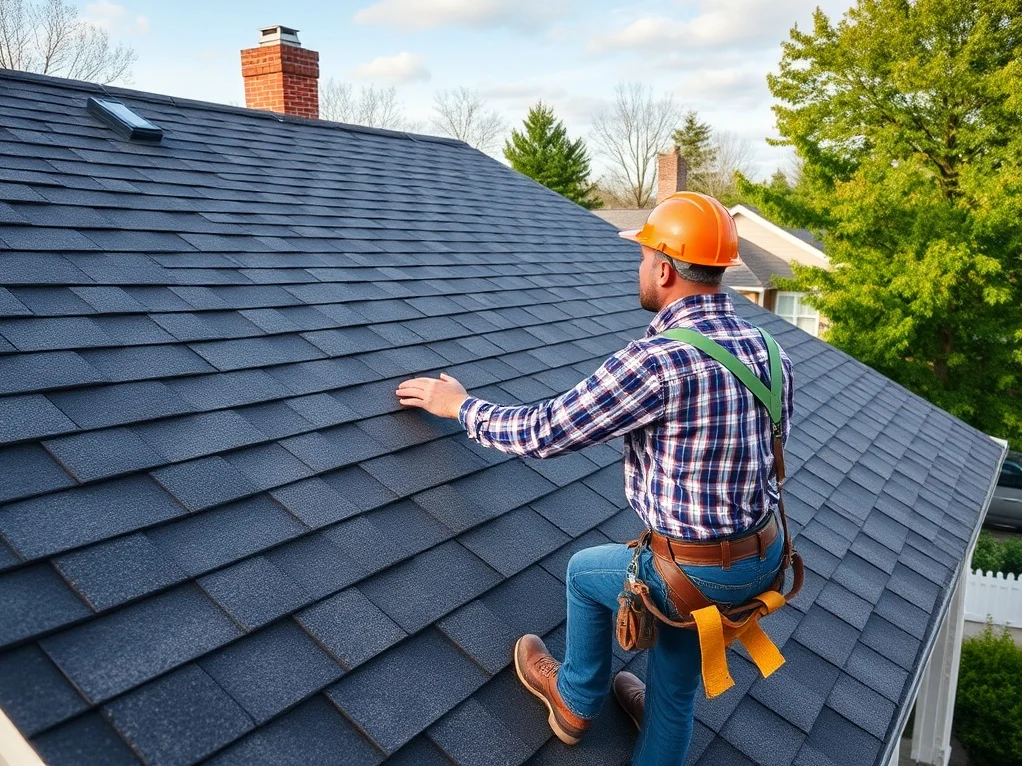
A pitched assembly lives or dies on the details: ice-and-water shield at the eave, synthetic underlayment across the field, a starter course along the rake, and staggered courses so the joints never line up. Ring-shank nails hold better than smooth shank in plywood or OSB sheathing.
Older buildings here still carry legacy materials: coal-tar pitch, asphalt bitumen, and organic felt or tar paper underlayment that has dried out and gone brittle.
Those assemblies get a full tear-off rather than an overlay, because new membrane will not bond to a substrate that is already flaking apart. We check the purlin, batten, and counterbatten lines too, since old decking sometimes sags between supports.
Every penetration gets a bead of mastic or roof cement, and caulk is a secondary seal only. Adhesives and mechanical fasteners do the structural work, which is why weatherproofing is a detail game and waterproofing is what keeps a tenant's ceiling dry in March.
Energy efficiency and sustainability start with the same question: can this roof be restored instead of landfilled? A coating or a recover keeps tons of old membrane out of the waste stream and lowers cooling load on a dark rooftop.
Roof maintenance tips we hand every property manager: clear the scuppers before freeze-up, walk the roof after a hail event, and log every patch so the next survey starts with real history. Call 6129790693 for a free estimate.